Bone Grafting for Dental Implants in Orlando
Missing teeth for years? Worn dentures? Lost jawbone? Bone grafting restores the foundation you need for successful implant placement, performed in-office by Dr. Rick Rampi, ICOI Fellow. No referrals to specialists. No delays.
The invisible step
When a tooth is lost, the surrounding jawbone begins to resorb within months. The longer the tooth is missing, the more bone is lost. After years of tooth loss or denture wear, significant bone loss can occur, sometimes so much that there's insufficient bone volume to support a dental implant.
Bone grafting is the solution. It rebuilds lost bone volume, creating a strong, stable foundation for implant placement. Bone grafting is not a setback, it's a routine, highly successful procedure that opens the door to implant treatment for thousands of patients who believed they couldn't get implants.
Fellow, International Congress of Oral Implantologists (ICOI)
Meet Dr. Rick Rampi →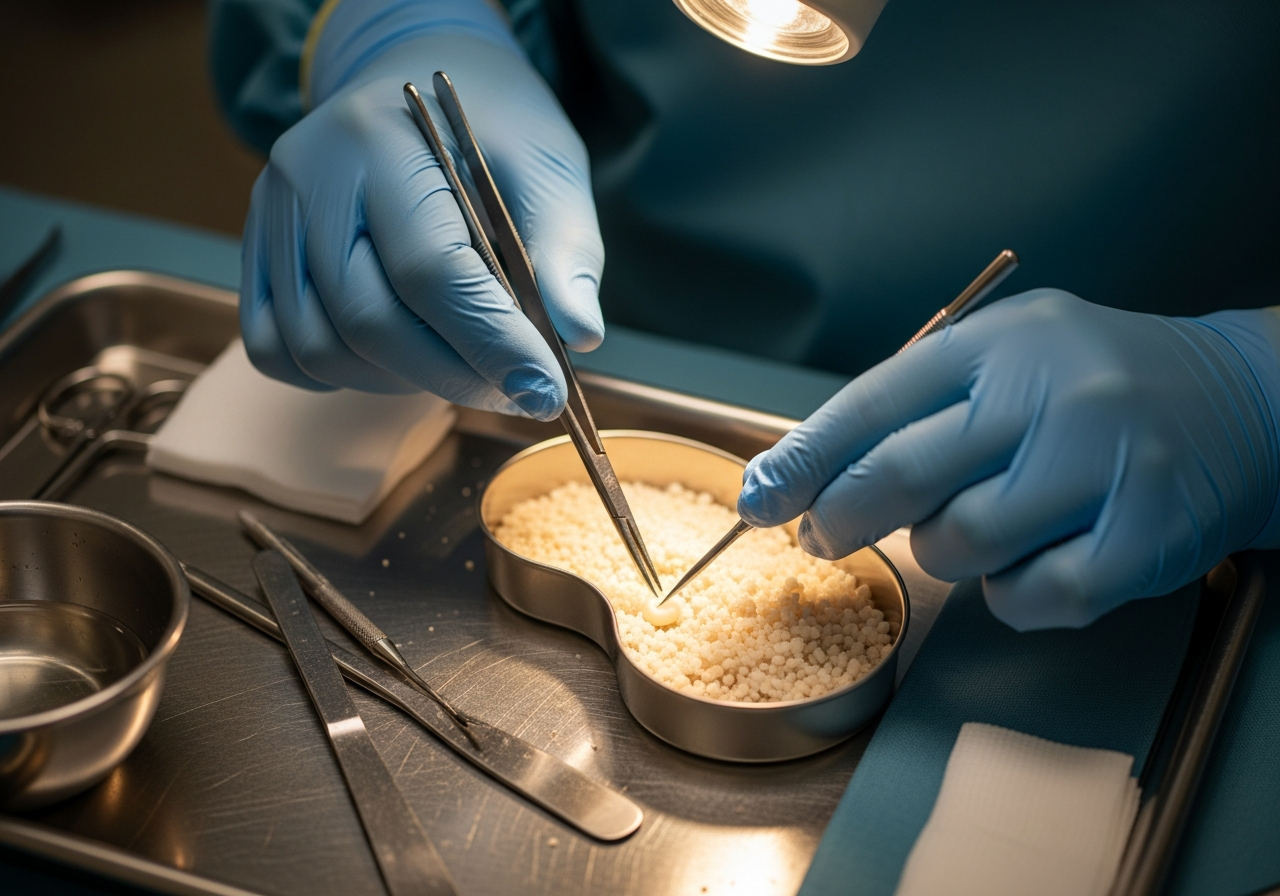
Signs grafting may be needed
You've had missing teeth for a long time
Bone loss begins months after a tooth is lost. If you've had a gap for years, grafting is likely needed before implant placement.
You've worn dentures for many years
Denture wear accelerates bone loss. Patients in dentures for 10+ years often have significant resorption that requires grafting.
You have advanced gum disease
Periodontal disease destroys bone. Once gum disease is treated, grafting rebuilds what was lost and enables implant placement.
Your upper front teeth are gone
The upper front jaw tends to resorb more than other areas. If you're missing anterior teeth, grafting is often required.
CBCT imaging shows insufficient bone
Dr. Rampi evaluates your bone with 3D imaging during consultation. If volume or density is insufficient for implant placement, grafting is recommended.
Graft materials
Harvested from your own jaw, the gold standard. Living bone from your own body integrates perfectly and has the highest success rate (95–98%). Requires a second surgical site and longer procedure.
Bone from a human donor bank, processed and preserved. Safe, effective, requires no second surgical site. Excellent success rates. Most patients choose allografts for convenience (90–95% success rate).
Bone from an animal source (commonly bovine), processed and sterilized. Provides good scaffolding for your own bone to grow. Effective and widely used (85–90% success rate).
Laboratory-engineered materials that mimic natural bone. Excellent scaffolding, no ethical concerns, no disease transmission risk. Good option for patients concerned about allografts or xenografts.
Dr. Rampi evaluates your case, bone quantity, graft size, complexity, and recommends the best material. He'll discuss all options and let you choose.
The procedure
At your consultation, Dr. Rampi takes CBCT imaging to map your jaw, showing exactly where bone is missing and how much grafting is needed. He plans the graft size, material, and placement before touching a scalpel.
Performed under local anesthesia. Dr. Rampi opens the gum to expose the bone, places the graft material, secures it with specialized membranes or fixation, then closes the gums. Total procedure time: 1–2 hours.
Mild to moderate swelling and discomfort are normal. You follow a soft diet and take prescribed medication. Most discomfort resolves within the first week.
Your body incorporates the graft into your own bone. CBCT imaging at 3–4 months assesses bone maturation. No implants placed yet, this patience ensures decades of implant success.
Once bone is mature and strong, dental implants are placed into the newly grafted bone. 1–2 hours under local anesthesia using 3D surgical planning data.
Implants fuse with bone over 4–6 months, then your permanent crown, bridge, or denture is attached. Total time from grafting to final teeth: approximately 9–10 months.
Why in-office matters
Many general dentists refer bone grafting cases to oral surgeons. Dr. Rick Rampi performs bone grafting himself, in-office, without referrals. This means:
Cost & payment
Detailed written estimate provided after CBCT imaging. Includes imaging, surgical procedure, graft material, post-op medications, and follow-up appointments.
Common questions
Implants require adequate bone volume and density to anchor securely. When a tooth is lost, the surrounding bone begins to resorb within months. Bone grafting rebuilds that lost volume, creating a strong foundation for implant placement and long-term success.
Dr. Rampi uses several materials depending on your case: autogenous bone (your own bone, gold standard, 95–98% success), allografts (human-sourced, 90–95% success), xenografts (animal-sourced, 85–90% success), and synthetic substitutes. He recommends the best option and lets you choose.
Initial healing takes 2–3 weeks. Full integration and maturation takes 4–6 months. During this time, bone is gradually replaced by your body's own bone in a process called incorporation. Implants are placed once the new bone is mature and strong.
Sometimes. If the grafting need is minor, Dr. Rampi can often perform grafting and implant placement in the same appointment. For larger grafts requiring significant bone restoration, grafting is done first, then implants are placed 4–6 months later.
The procedure is performed under local anesthesia, you feel no pain during surgery. Post-operative discomfort is typically mild to moderate and managed with prescribed pain medication. Most patients report minimal pain after the first 3–5 days.
We never recommend procedures you don't need. If you have adequate bone, we place implants directly. If bone is insufficient, grafting is recommended because implants placed in insufficient bone often fail within 5 years. The graft upfront ensures the implant succeeds. Dr. Rampi is transparent about the need and explains exactly what imaging shows.
Small to medium grafts: $1,500–$3,000. Large or complex grafts: $3,000–$6,000+. We provide a detailed written estimate after CBCT imaging. The cost is worth it, successful implants depend on a solid bone foundation.
Implant solutions we offer
Service area
Ready to build the foundation for your implants?
Dr. Rampi will use CBCT imaging to show you exactly how much bone you have and what grafting can achieve. Transparent. In-office. No referrals.