Implant-Supported Dentures in Orlando, FL
Traditional dentures shift and require adhesive. Implant-supported dentures are anchored by 2–4 implant posts, they stay firmly in place while you eat, speak, and live normally. Performed by Dr. Rick Rampi, ICOI Fellow.
A more stable alternative
Implant-supported dentures are custom dentures anchored and stabilized by dental implants, typically 2–4 implant posts per arch. Instead of relying on suction and adhesive, implant dentures snap securely onto the implants. The result is a dramatic improvement in comfort and function.
Fellow, International Congress of Oral Implantologists (ICOI)
Meet Dr. Rick Rampi →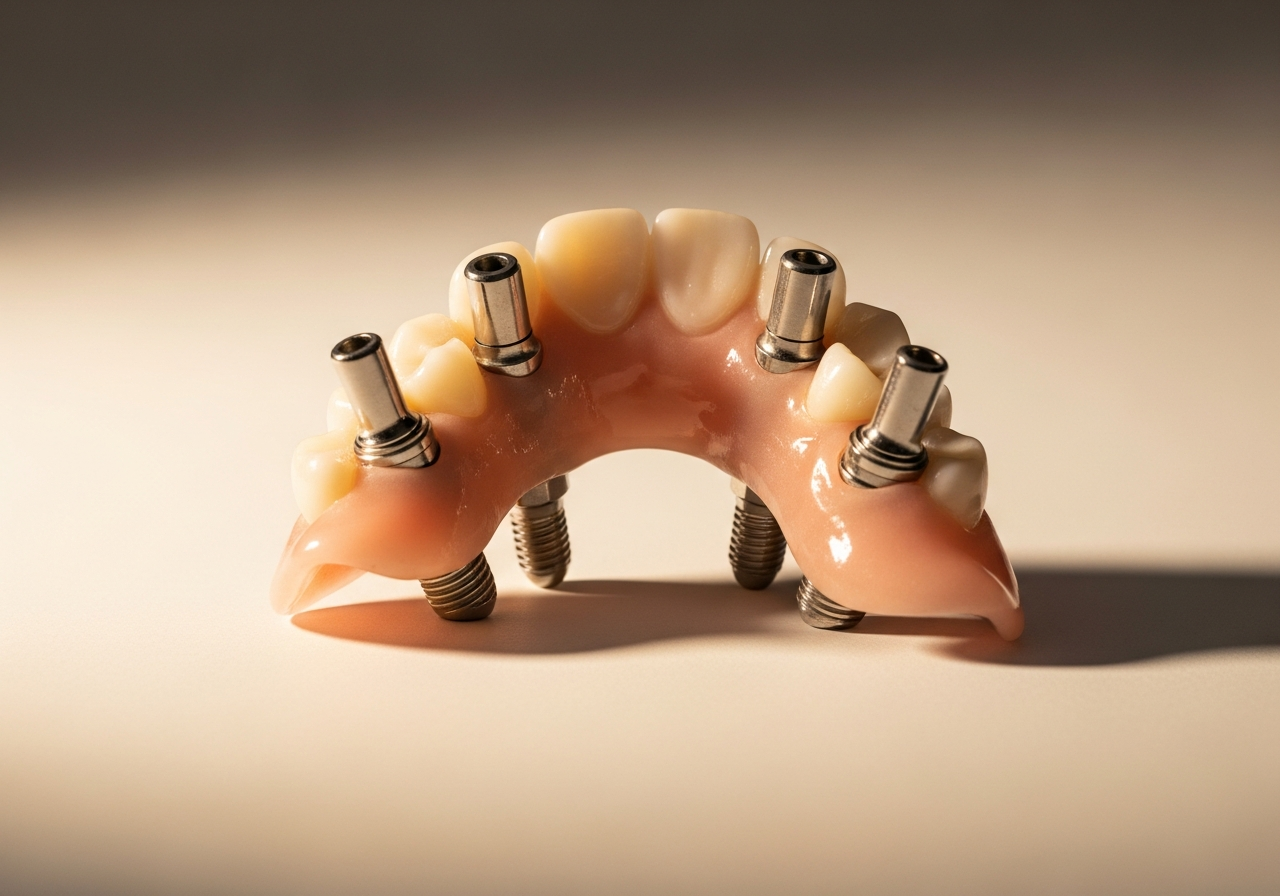
Implant dentures vs. traditional
| Factor | Implant-Supported Dentures | Traditional Dentures |
|---|---|---|
| Stability | Snap onto implants, stay firmly in place | Shift during eating/speaking, require adhesive |
| Daily maintenance | Remove nightly, clean denture and implants | Remove nightly, clean denture, apply adhesive daily |
| Comfort | No adhesive, fewer pressure sores, feel secure | Require adhesive, may develop sore spots from shifting |
| Bone health | Implants slow bone loss significantly | Accelerate bone loss, face changes shape over time |
| Longevity | Implants permanent; denture base every 5–7 yrs | Full denture replaced every 5–7 years as bone recedes |
| Cost (initial) | $8,000–$15,000 per arch | $1,000–$2,000, plus ongoing replacements |
The procedure
Meet with Dr. Rick Rampi to discuss your goals and options. CBCT imaging shows bone volume and quality. We evaluate how many implants you need, whether bone grafting is required, and whether your current denture can be modified or needs to be fabricated fresh.
Any remaining teeth are extracted. If bone grafting is needed, Dr. Rick performs it, often in the same appointment. A temporary denture is provided if needed during healing.
Using CBCT data and often a 3D-printed surgical guide, Dr. Rick places 2–4 implant posts under IV sedation or local anesthesia. Most patients report it's faster and less uncomfortable than expected.
The implants fuse with bone. During this time, you wear your existing denture or a temporary one. Critical for long-term success, patience here ensures your implants remain stable for decades.
Once implants are integrated, we create your permanent implant-supported denture. If your existing denture fits well, we may simply add snap attachments to secure it. If a new denture is needed, custom impressions are taken and fabrication begins.
Your implant-supported denture is fitted and adjusted for optimal comfort, fit, and retention. Follow-up appointments ensure everything is working perfectly.
Am I a candidate?
Currently struggling with traditional dentures that slip or require constant adhesive
Missing all or most teeth on one or both arches
Long-term denture wearers (bone grafting can restore what's needed)
Willing to remove dentures nightly for cleaning and gum rest
Wanting improved stability and function without permanently fixed teeth
Cost & payment
Detailed written estimate provided before treatment begins. If your existing denture fits well, we may be able to modify it, saving significant cost.
2 vs. 4 implants
Lower cost. Works well for patients with adequate front jaw bone. Provides good stability and retention. Some minor movement compared to 4-implant version. Good option when budget is a concern.
Higher cost but dramatically improved stability. Best retention and load distribution. Minimal movement. Better for patients with significant bone loss or those wanting maximum chewing power and comfort.
Common questions
Implant-supported dentures are anchored by 2–4 implants, so they don't slip or shift. Traditional dentures rest on gums and require adhesive, they shift during eating and speaking. Implant dentures are far more stable, functional, and comfortable. You still remove them nightly, but during the day they feel secure.
Often yes. If your dentures fit well, we can add snap attachments to secure them to implants, saving cost. If they're worn or ill-fitting, new implant-supported dentures are fabricated for optimal fit and function. We evaluate this during consultation and discuss your options.
Typically 2–4 per arch. Two implants provide good stability and retention. Four implants offer maximum stability and load distribution. Dr. Rick recommends the optimal number based on your bone quality and goals.
Typically $8,000–$15,000 per arch depending on the number of implants and whether your existing denture can be modified. This is less expensive than full arch fixed implants but significantly more functional than traditional dentures. We provide a detailed estimate at consultation.
Yes, most patients remove them nightly for cleaning and to let gums rest. Some prefer this because denture maintenance is straightforward. Others opt for fixed full arch implants if they want teeth they never remove. Both are excellent options, the choice depends on your preference and budget.
Yes, significantly. The implants stimulate the bone, slowing bone loss compared to traditional dentures, which actually accelerate bone loss. Implant-supported dentures aren't as bone-preserving as fixed full arch implants, but they're far superior to traditional dentures in this regard.
Service area
Ready to upgrade from traditional dentures?
We'll evaluate your bone, discuss your options, and determine whether your existing denture can be modified, saving cost. No pressure. Honest assessment.