Single Tooth Implants in Orlando
Replace a missing tooth with an implant that looks, feels, and functions like your natural tooth, without altering the teeth on either side. Performed by Dr. Rick Rampi, ICOI Fellow, using 3D digital planning and CBCT imaging.
The gold standard
A single tooth implant is a three-part restoration. First, a small titanium post is surgically placed directly into the jawbone where the tooth was lost. The bone then fuses to the implant over several months, creating a permanent, stable anchor. Finally, a custom crown is attached, restoring the look and function of your natural tooth.
The result is indistinguishable from a real tooth. It doesn't affect the teeth next to it. It doesn't shift or move. You eat normally, speak clearly, and maintain your natural facial structure.
Fellow, International Congress of Oral Implantologists (ICOI)
Meet Dr. Rick Rampi →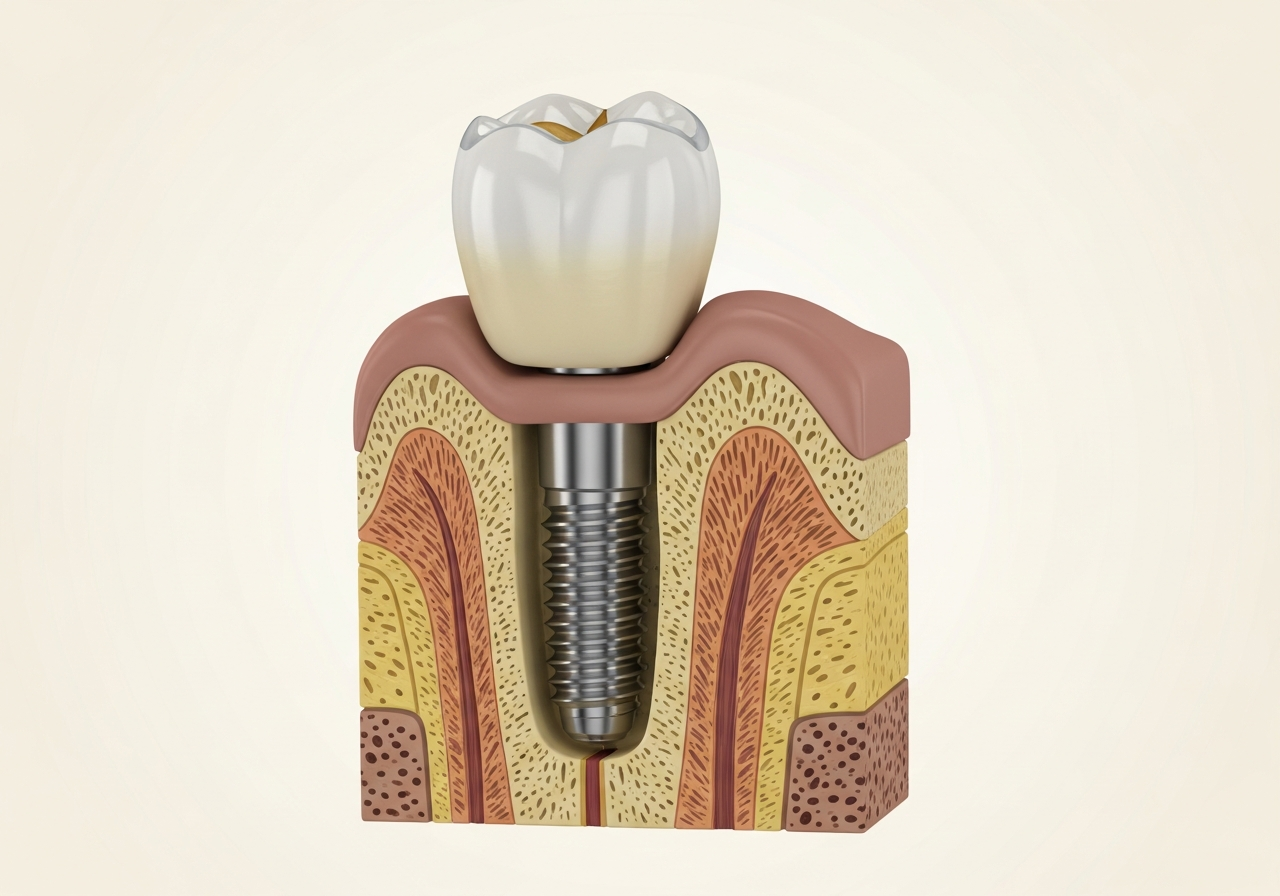
Implant vs. alternatives
The procedure
Dr. Rick Rampi reviews your bone density, volume, and anatomy with 3D imaging. He evaluates your health history, discusses the timeline and cost, and answers every question. No surprises later.
If gum disease is present, we treat it first. If bone volume is insufficient, Dr. Rick performs bone grafting, typically in the same appointment or 4–6 months before placement depending on graft size.
Using CBCT data and often a 3D-printed surgical guide, Dr. Rick places the titanium implant post into the jawbone under local anesthesia. Most patients report it's faster and less uncomfortable than expected.
The implant fuses with the bone. You function normally during this phase. A temporary restoration may be placed for appearance. This stage is the most critical for long-term success, patience here ensures decades of stability.
Once osseointegration is complete, an abutment connector is placed, then your custom crown is fabricated and attached. The crown-fitting process takes 2–3 weeks. Your new tooth is ready to use.
Am I a candidate?
If you've been told you're not a candidate elsewhere, get a second opinion. Many seemingly complex cases are straightforward with the right technology and training.
In reasonably good overall health (most conditions don't disqualify you)
Have or can develop adequate jawbone, bone grafting restores what's missing
Have healthy gums, or are willing to treat active gum disease first
A non-smoker, or committed to quitting before treatment
An adult with fully developed jaw bone (most adults of any age qualify)
The technology
We use Cone-Beam CT (CBCT) imaging to create a detailed 3D map of your jaw before placing anything. This imaging shows bone density, nerve locations, and sinus proximity, critical information that standard X-rays miss.
Using this 3D data, Dr. Rick plans the exact position, angle, and depth of your implant. In many cases, we create a 3D-printed surgical guide that ensures precision placement to the millimeter, the level of planning used in specialist surgical centers.
Cost & payment
A single tooth implant typically costs $3,500 to $6,500, depending on bone quality, whether grafting is needed, and crown material. We provide a detailed written estimate at consultation, no surprise charges.
Common questions
With proper care, a single tooth implant can last a lifetime. The implant post is permanent. The crown may need replacement after 15–20 years due to normal wear, expected maintenance, not failure. Good oral hygiene and regular checkups are the key.
In most cases, yes. A bridge requires grinding down adjacent healthy teeth permanently to support the restoration. An implant doesn't touch neighboring teeth. Implants also preserve the jawbone beneath the missing tooth, bridges don't. Higher upfront cost, but significantly better long-term value.
Typically $3,500 to $6,500 depending on bone quality, whether grafting is needed, and crown material. We provide a detailed estimate at consultation. CareCredit and flexible payment plans make it affordable.
The procedure is done under local anesthesia, so you feel no pain during placement. Most patients report it's less uncomfortable than they expected. Some mild soreness in the days following is normal and managed with over-the-counter medication.
Yes. Dr. Rick Rampi can perform bone grafting to build up areas with insufficient bone, often in the same appointment as implant placement. We evaluate bone with CBCT imaging at consultation. Many patients told they need referrals elsewhere can actually be treated here.
The implant is the titanium post surgically placed in the bone, the anchor. The abutment is a connector piece on top of the implant. The crown is the visible tooth that attaches to the abutment. All three together make up your complete restoration.
Implant failure is rare with proper planning, less than 2% of cases. If an implant doesn't integrate with bone, it's removed and can usually be replaced after the area heals. This is why pre-surgical planning and surgical technique matter so much.
Service area
Schedule today
We'll evaluate your bone, discuss your options, and give you a clear timeline and cost estimate. No pressure. No referrals. Just an honest assessment from a doctor who does this work himself.